
'%20id='ico-down'%20stroke='%23000000'%20stroke-width='1.5'%3e%3cg%20transform='translate(1092.250000,%20254.750000)'%3e%3cpolyline%20id='Path-2-Copy-4'%20transform='translate(5.500000,%202.750000)%20scale(1,%20-1)%20rotate(-180.000000)%20translate(-5.500000,%20-2.750000)%20'%20points='0%200%205.5%205.5%2011%200'%3e%3c/polyline%3e%3c/g%3e%3c/g%3e%3c/g%3e%3c/svg%3e)


Healthcare
Healthcare Basics
Guide to getting health insurance in Italy in 2026
Health insurance in Italy is split between public and private coverage. Find out who needs what, how to register, coverage, and costs.


Italy is one of five Blue Zones in the world (where life expectancy is exceptionally long). Naturally, you would assume that either olive oil plus wine equals magic or the healthcare system is just that good. It could also be a bit of both, of course.
These are not the most important questions, though. Expat residents in Italy will want to know how much they have to pay for public or private health insurance and what is covered.
Here’s more on the subject:
Cigna Global
Enjoy peace of mind while living in Italy with Cigna Global’s long-term international health insurance plans (12+ months). Get tailored coverage, direct billing with many providers, complex case management, and global care on demand, with access to a network of 1.5+ million doctors, specialists, and therapists.

Health insurance in the Italian healthcare system
Italy’s healthcare system consists of the large public National Health Service (Servizio Sanitario Nazionale – SSN) and a smaller network of private healthcare providers.
Funded through taxes rather than health insurance, the SSN has mandatory registration for most residents. This also means any legal resident can access public healthcare as long as they’re registered with a local health agency (Azienda Sanitaria Locale – ASL) and have a health card (Tessera Sanitaria).
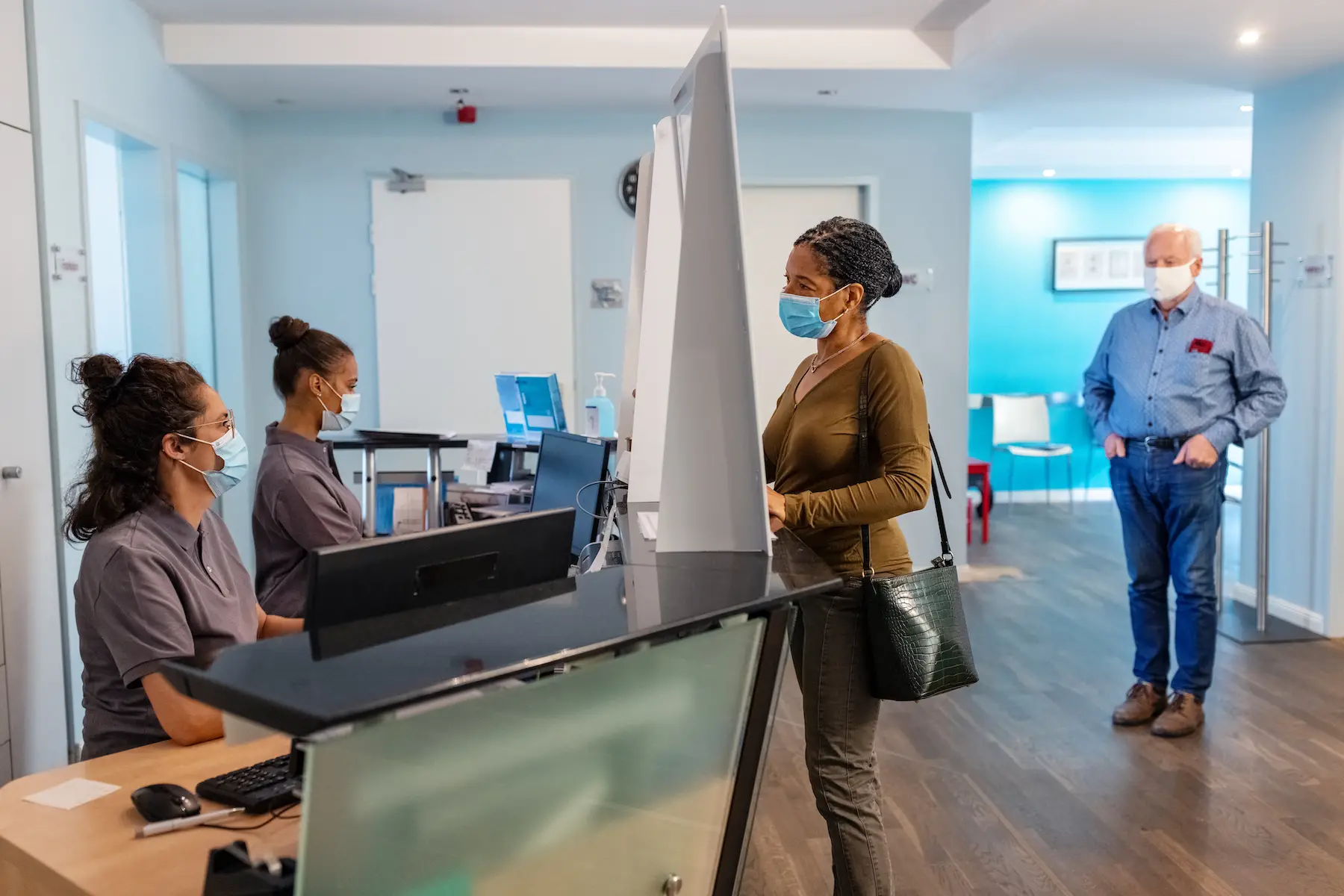
A mix of public and private coverage
While Italy’s public healthcare services are either free or low-cost, the system only covers part of healthcare expenses. That is where private health insurance comes in.
The private sector covers health services that are excluded from the essential benefits package. It also offers a wider choice among healthcare providers, and some even cover copayments and compensation during hospitalization.
Of course, private health insurance is also essential for Italian residents who aren’t eligible for – or can’t afford – public healthcare.

There are two types of private health insurance in Italy:
- Corporate insurance – included in some job benefits packages, where the employer pays part or all of the premium
- Voluntary insurance – unrelated to employment, where the insured pays the entire premium
The Institute for the Supervision of Insurance (Istituto per la Vigilanza sulle Assicurazioni – IVASS) regulates the insurance industry. All legitimate insurance providers are on the Register of Insurance Undertakings, so be sure to check the insurer’s credentials before signing up with them.
Who needs health insurance in Italy?
Health insurance is mandatory in Italy. It doesn’t matter if you are a short-stay expat or an Italian citizen whose family lines go generations back: if you live in Italy, you must have health insurance from either the public or private sector – or both.
If you are a new resident of Italy and are staying less than three months, you may be able to use the health insurance from your home country:
- Expats from the EU or EFTA (European Free Trade Association – Iceland, Liechtenstein, Norway, and Switzerland) can use their European Health Insurance Card (EHIC – Tessera Europea Assicurazione Malattia – TEAM)
- People from the UK can access public healthcare with their Global Health Insurance Card (GHIC)
- If you don’t have an EHIC or GHIC, you may use an S1 form to bill your medical costs to your home country
If you can’t use your homegrown health insurance, or it’s been three months and you’re staying longer, you’ll need to get additional insurance.
Feather Insurance
Feather is a digital-first insurance provider built for expats that combines a fast online signup with real human support. Their insurance plans are easy to understand, fully in English, and can be purchased within minutes. Customers get instant access to visa-ready documents, clear guidance throughout the process, and an English-speaking support team available whenever they need help.
The whos and whats of public health insurance
Italy’s public health insurance is only compulsory for a part of the population. For example, it is mandatory for all foreign workers and their dependent family members to register for the SSN.
Residents who fall outside of the scope of mandatory registration (iscrizione obbligatoria) may opt in voluntarily (iscrizione volontaria). Expats who aren’t working, such as students and pensioners, can choose to register for public or private health insurance. They could also do both, but that may not be very cost-effective.

The difference between mandatory and voluntary public healthcare, however, is a big chunk of change every year. Compulsory registration is free, and voluntary registration is available for a – pretty hefty – annual fee. This will be explained in more detail below.
Summary of who can access public health insurance
Before we dive into the nitty-gritty, here’s a quick overview of who needs what type of health insurance:
| What is your status? | Can you access public health insurance? | Do you need private health insurance? |
| Employee of an Italian company | Yes | Only if you want 100% coverage |
| Employee of a foreign company | Yes | Public insurance is voluntary, so you’ll have to pay the annual fee. Private health insurance may be less expensive. |
| Job seeker | Yes | Public insurance is voluntary, so you’ll have to pay the annual fee. Private health insurance may be less expensive. |
| Student | Yes | Public insurance is voluntary, so you’ll have to pay the annual fee. Private health insurance may be less expensive. |
| Retiree | Yes | Public insurance is voluntary, so you’ll have to pay the annual fee. Private health insurance may be less expensive. |
| Asylum seekers | Yes | Only if you want 100% coverage |
Who qualifies for Italian public health insurance?
All Italian citizens are required by law to sign up for the SSN. The same applies to foreign workers and their dependent family members. It becomes more tricky if you’re an expat without an Italian work contract.

You can register for public health insurance in Italy when you:
| Mandatory | Voluntary (EU citizens) | Voluntary (non-EU citizens) |
| Are Italian | ||
| Are a dependent family member of an Italian citizen | Are over 65 and benefit from the family reunification visa | Are over 65 and benefit from the family reunification visa |
| Have regular (self)employment | Have a residence permit but don’t carry out work | Have a residence permit but don’t carry out work |
| Are unemployed and enrolled in the employment center | Are a volunteer | Are a volunteer |
| Are an employee of a foreign company and have a non-Italian work contract | Are an employee of a foreign company and have a non-Italian work contract | |
| Have permanent residence or are awaiting citizenship | ||
| Have an S1 form | ||
| Are a minor entrusted to institutions or families | Are a student or au pair | Are a student or au pair |
| Are an asylum seeker | Are religious personnel (e.g., clergy) | |
| Are criminally or psychiatrically detained |
Other expats cannot sign up for public health insurance. For example, holders of a medical or tourist visa are not eligible for public insurance and must purchase private coverage.
Do you have the right to state health insurance if you are unemployed?
Unemployed foreign citizens are (maybe, maybe not) eligible for public health insurance in Italy. It all depends on your nationality and career status.

When they first move to Italy, job seekers from the EU/EFTA/UK can access public healthcare with their EHIC/GHIC card or S1 form. After three months, EU/EFTA nationals must register with the Anagrafe (Registry Office) to retain the right to stay. They’ll then get a residence card and may voluntarily register for the SSN or purchase private insurance.
UK citizens will have to file a new visa application and take out private health insurance in order to stay in Italy. Once they have a residence permit, they can elect to register for public healthcare or continue to use their private insurance.
The same also applies to job seekers from other non-EU/EFTA countries. These career chasers will need to take out private health insurance as part of their visa application before coming to Italy. After receiving their residence permit, they may sign up for public healthcare or continue to use their private insurance.
The regulations are a bit different for unemployed expats who came to Italy with a job and have since lost said job. If you were previously gainfully employed, you can register with the Italian Employment Center (Centro per l’Impiego). You’ll have to declare you are available for work immediately. Once that’s done, it’s mandatory for you to have public health insurance.

Writer and editor
Laura van der Most
Insider tip
Expat residents must also update the Immigration Desk (Sportello Unico Immigrazione) within five days of their dismissal. Otherwise, they may lose their right to stay in Italy.
The Sportello Unico can also check whether it is possible for you to opt in or stay registered with the SSN.
Italian health insurance for students
All minor children – including newborn babies and unaccompanied child refugees – must be registered with public health insurance in Italy. Their policies are linked to the parent’s or guardian’s SSN and provide free healthcare to those under 14.
Minor students take advantage of their parents’ healthcare benefits. Once they’re 18, however, they must get their own tax code and register with the SSN independently.
Long-stay international students can access public healthcare for an annual fee or take out private insurance.

Pensioners and their health benefits in Italy
Foreign retirees are not required to register for public health insurance when they relocate to Italy. Instead, they may bill any medical costs to their home country (by filling out an S1 form) or purchase private insurance.
Of course, they may also sign up for public health insurance voluntarily by paying the annual fee.

One of the benefits of public health insurance is that seniors may be exempt from having to pay co-payments. For example, you can access public healthcare services for free when you are:
- A senior over 65 and your total household income is less than €36,152 per year
- A pensioner over 60 and your annual household income is less than €8,263 (or €11,362 if you have a dependent spouse)
The downside of the public health sector is that it struggles to meet the needs of the ever-growing aging population in Italy. There is a shortage of nurses, and waiting lists are getting increasingly long. As such, you may be better off depending on private health insurance.
Read more about senior health insurance and elderly care in our dedicated country article.

Coverage for tourists and short-stay visitors
EU/EFTA/UK tourists and short-stay visitors can typically use their EHIC or GHIC to access medical help in Italy. Be sure to check with your country’s public healthcare provider; you may need additional travel insurance for non-urgencies.
Short-stay visitors from outside the EU or UK should get health insurance from an international provider, like:
Asylum seekers and refugees
Public healthcare registration is mandatory for asylum seekers and refugees in Italy. If you live at a reception facility, you can ask the employees there to share information and help you with the application process.

You can also check in with other sources of support. Italian NGOs who specialize in migrant and refugee healthcare include:
- Medici per I Diritti Umani (MEDU) – Medical Doctors for Human Rights
- LILA – health assistance for persons with HIV
- Medici Senza Frontiere (MSF) – medical care and assistance in various locations in Italy
What does public health insurance cover?
The SSN gives you free access to essential medical care, including doctor visits, vaccinations, hospital and emergency care, cancer prevention screenings, and HIV tests. Prescription medications, diagnostic procedures, lab work, and some specialist treatments require you to pay a small fee (so-called health tickets, ticket sanitari).
For official 2026 coverage and healthcare costs in Italy, please visit your region’s health ticket website.
How to apply for public health insurance in Italy
What to do before your move
If you do not have an EHIC or GHIC card, your very first step – before you even move to Italy – is to contact your country’s public healthcare authority. They will be able to advise you on your specific situation and your rights to access Italian public healthcare. EU/EFTA/UK nationals may also have to fill out an S1 form with their current health insurance provider.
Citizens from non-EU/EFTA/UK countries will need to take out private health insurance to qualify for an Italian visa.

How to register once you are in Italy
Because the public healthcare system is tax-funded, you’ll need a (provisional) tax code to sign up. The Immigration Desk or Police Headquarters will provide you with one when applying for a residence card or registering your move to Italy.
Next, you have to go to your local ASL, where you can register for the SSN and a primary care physician (medico di base). This doctor will also be listed on your health card.

What documents will you need to register for the SSN?
The most essential documents to present when you want to register for public health insurance are a valid ID, Italian tax code, proof of address, and residence permit.
If you’re in the process of getting your residence card, you may also present the Immigration desk’s confirmation receipt. Refugees don’t have to supply a valid ID if they are unable to.
Depending on your situation, you may need to provide additional documents:
- Seasonal workers (decreto flussi) must supply a photocopy of the Immigration Desk’s clearance and a copy of their housing contract
- Freelancers and self-employed workers will need to give their VAT number or social security position
- Holders of the family reunification visa must present their entry visa and a photocopy of the Immigration Desk’s clearance
- International students will need to provide their student visa and enrollment certificate
- Eligible retirees, students, and job seekers must have a S1 form

If you need assistance or advice on the necessary documents for your specific situation, contact immigration experts such as those at Moving2Italy.
Moving2Italy
When relocating to Italy, get expert help from Moving2Italy on taxes, work permits, and setting up a business. They also provide personalized support for immigration, social security, and residence, helping you navigate your new life abroad. For assistance with fiscal and immigration matters, contact Moving2Italy.
Italian health card: La Tessera Sanitaria
After registration, you’ll receive your Italian health card by mail. It’s usually valid for the duration of your residence permit, but check the expiration date so that you know when to renew it.
If you are still in the process of making your residency legal, you won’t automatically receive a health card. Instead, you’ll get a replacement certificate that contains an ID number. The actual card will be released once your permit comes through.
Getting reimbursed for medical care
When you visit a healthcare facility, make sure to bring your Tessera Sanitaria card; this ensures you have access to free treatments.
Medical services that require co-payments (i.e., tickets) will charge their fees afterward. Naturally, pharmacies ask for payment when you pick up your medication.
Every region has its own method of payment, but you can generally pay at the healthcare facility. You can also pay online using the PagoPA platform or in person with branches of the PagoPA network (e.g., tobacco shops, post offices, banks, ATMs, and some supermarkets).
Once paid, you will get a receipt that you can send to your private health insurance company to get reimbursed.
The whos and whats of private health insurance
Around 10% of Italians top up their public coverage with private health insurance. Some insurance companies cater to workers with specific professions, some to students or pensioners, and others to internationals with special English- or other foreign language services.

The advantages of private insurance
As mentioned before, the private sector covers health services that are excluded from the essential benefits package. Aside from that, other benefits of private health insurance include:
- No copayments
- Additional coverage
- Wider range of providers
- Shorter waiting times
- Direct access to specialists
- Higher levels of comfort and privacy in hospitals and health clinics
- Compensation during hospitalization
Private health insurance for expats in Italy
As you will have understood by now, some expats moving to Italy may better benefit from a private or international health insurance plan:
- Non-EU/EFTA/UK expats and immigrants will need to prove that they have valid health insurance coverage before they can enter the country
- Unlike those coming on a work visa with a contract in hand, most internationals will not have healthcare coverage during the first leg of their stay
- Foreigners pay an annual fee for public health insurance, which can be a large expense
- Finally, certain categories of internationals do not qualify for public healthcare at all

How do you apply for private medical insurance in Italy?
With the number of health insurance options in Italy, it makes sense to look around and compare plans. Aside from the cost, things you could consider include:
| Consideration | Questions to ask |
| Does the policy suit your needs | Are you able to select what you need and remove what you don’t? |
| Payment process | Will your insurer settle bills directly or do you have to pay first and then claim reimbursement? How complicated and/or time-consuming is the process? |
| Options for deductible | Can you lower your premium by increasing your deductible? |
| Overseas coverage | Is travel insurance offered and do you need it? |
| Customer feedback | How does the company score on consumer ratings websites? |
| Special offers and incentives | What additional benefits are offered? For example, do they partner with retailers or service providers to offer discounts elsewhere? |
| Ethics | How does the company fare on ethics and sustainability rating sites, such as: – CSRHub – Standard Ethics – Corporate Knights |
| Cancellation policy | How easy is it to change to another provider? Will you have to pay to cancel? |
Be sure to ask your employer about their healthcare policy as well; you may be able to sign up with a private insurance company at a discount.
Once you’ve decided on a policy, you can contact the insurance company directly to sign up. They will be more than happy to walk you through the process. Beware of pushy salespeople, though! You might walk away with a completely different plan than you had in mind.
International health insurance providers in Italy
For expats not (yet) eligible for local private healthcare in Italy, some of the largest international health insurance companies operating in the country include:

The Munich-headquartered financial services company offers international health insurance plans for expatriate students, professionals, couples and families. Depending on the policy, Allianz Care covers everyday medical expenses, emergency treatment, dental consultations, maternity, surgery, and outpatient fees.

APRIL International is a health and travel insurance provider operating in 180 countries. Their range of insurance products is tailored to the needs of expats, whether you’re relocating your family, studying for a semester abroad, enjoying a working holiday, or simply travelling. 130,000 expats already trust APRIL International.

The American health services company serves expats and globally mobile individuals in more than 200 international jurisdictions. Cigna Global’s policies are easily customized to coverage and cost requirements and customers can pick from three coverage levels, modular plans, and several cost-share options.
How much does Italian health insurance cost?
Public health insurance
Around 20% of Italy’s tax revenue goes to fund the SSN. The rest is used for social security, pensions, education, and defense.
If your registration is mandatory, you only have to pay the health tickets to access public healthcare. Residents who voluntarily register for public healthcare are slapped with a yearly fee, determined by their annual income.

Optional registrations pay:
- 7.5% rate on earnings up to €20,658.28
- 4% rate on the income share between €20,658.28 and €51,645.69
So, as a practical example, expats who make €25,000 a year are charged:
| 7.5% x €20,658.28 = | €1,549.31 |
| 4% x (€25,000 – €20,658.28) = | €173.69 |
| €1,723 |
Or they would, if the Italian government didn’t change the rules as of 1 January 2024. Now, all foreigners – both EU and non-EU – have a minimum fee of €2,000 per year (exceptions are listed below). So, if you earn €25,000 a year, your annual fee is €2,000.
If you earn more than the minimum fee, you pay the higher amount. For example, let’s say your yearly income is €50,000:
| 7.5% x €20,658.28 = | €1,549.31 |
| 4% x (€50,000 – €20,658.28) = | €1,173.69 |
| €2,722.98 |
It’s also important to note that the fee applies on calendar years and must be paid in full (even if you’re just staying for, let’s say, six months). If you arrive in November and leave in March, you’ll pay double.
Reduced fees for au pairs, religious staff, and students
The Italian government does offer leniency toward international au pairs, religious staff, and students. While the annual fee is still income-based, the minimum spend is less:
- Au pairs must pay at least €1,200
- Religious personnel must pay at least €700
- Students must pay at least €700
Dependent family members are not eligible for this reduced amount; they pay at least €2,000 to voluntarily access public health insurance in Italy.

Private health insurance
Depending on your insurance plan, you will pay a monthly or quarterly premium. Most companies have different policy levels, ranging from basic to comprehensive. Premiums usually depend on:
- The plan level you choose and its claim limit (e.g., €1,000,000)
- Coverage location (i.e., whether the policy extends overseas)
- Extra coverage (e.g., dental care)
- Personal information, such as age, health conditions, and lifestyle
- Number of insured dependents
Many insurers also offer customers lower premiums in exchange for higher deductibles. This is the amount you pay for healthcare before the insurance takes over. However, this is a gamble you’ll have to consider: on the one hand, you will pay a lower premium each year, but on the other, you may face hefty medical bills when you do have a health scare.
Again, it’s always smart to research and compare insurance policies to get the best healthcare coverage.
Useful resources
- Ministry of Health’s e-portal – official government website with information about healthcare in Italy
- Your Europe – official EU source for information on the S1 form
- European Health Insurance Card – more information on the EHIC for EU residents in Italy
- Global Health Insurance Card – more information on the GHIC for UK residents in Italy



Did you find this guide helpful?