'%20id='ico-down'%20stroke='%23000000'%20stroke-width='1.5'%3e%3cg%20transform='translate(1092.250000,%20254.750000)'%3e%3cpolyline%20id='Path-2-Copy-4'%20transform='translate(5.500000,%202.750000)%20scale(1,%20-1)%20rotate(-180.000000)%20translate(-5.500000,%20-2.750000)%20'%20points='0%200%205.5%205.5%2011%200'%3e%3c/polyline%3e%3c/g%3e%3c/g%3e%3c/g%3e%3c/svg%3e)




'%20fill='%23000000'%3e%3cg%20id='icons'%20transform='translate(56.000000,%20160.000000)'%3e%3cpath%20d='M144,7339%20L140,7339%20L140,7332.001%20C140,7330.081%20139.153,7329.01%20137.634,7329.01%20C135.981,7329.01%20135,7330.126%20135,7332.001%20L135,7339%20L131,7339%20L131,7326%20L135,7326%20L135,7327.462%20C135,7327.462%20136.255,7325.26%20139.083,7325.26%20C141.912,7325.26%20144,7326.986%20144,7330.558%20L144,7339%20L144,7339%20Z%20M126.442,7323.921%20C125.093,7323.921%20124,7322.819%20124,7321.46%20C124,7320.102%20125.093,7319%20126.442,7319%20C127.79,7319%20128.883,7320.102%20128.883,7321.46%20C128.884,7322.819%20127.79,7323.921%20126.442,7323.921%20L126.442,7323.921%20Z%20M124,7339%20L129,7339%20L129,7326%20L124,7326%20L124,7339%20Z'%20id='linkedin-[%23161]'%3e%3c/path%3e%3c/g%3e%3c/g%3e%3c/g%3e%3c/svg%3e)
'%20fill='%23000000'%3e%3cg%20id='icons'%20transform='translate(56.000000,%20160.000000)'%3e%3cpath%20d='M335.821282,7259%20L335.821282,7250%20L338.553693,7250%20L339,7246%20L335.821282,7246%20L335.821282,7244.052%20C335.821282,7243.022%20335.847593,7242%20337.286884,7242%20L338.744689,7242%20L338.744689,7239.14%20C338.744689,7239.097%20337.492497,7239%20336.225687,7239%20C333.580004,7239%20331.923407,7240.657%20331.923407,7243.7%20L331.923407,7246%20L329,7246%20L329,7250%20L331.923407,7250%20L331.923407,7259%20L335.821282,7259%20Z'%20id='facebook-[%23176]'%3e%3c/path%3e%3c/g%3e%3c/g%3e%3c/g%3e%3c/svg%3e)

This guide walks through your rights and obligations for Australian expat taxes, including filing requirements, exemptions, deductions, and practical steps, as well as touching on how Wise can help with currency conversion challenges when filing taxes from abroad:
- Do I have to file/pay Australian taxes as an Australian living abroad?
- Who is considered an Australian resident for tax purposes?
- Who is exempt from filing their Australian taxes?
- What taxes do I have to pay if I’m an Australian citizen/resident living abroad?
- Will I be double-taxed on my income? (Double taxation and exemptions for Australian expats)
- Australian tax exemptions, deductions, and credits for expats
- Reducing your tax liabilities when filing Australian taxes abroad
- How and when to file your Australian taxes from abroad
- What foreign income should I declare on my Australian tax return?
- How to pay your Australian taxes from abroad
- Late tax returns and penalties in Australia
- Managing currency exchange
- What to do when leaving Australia
- Returning to Australia
- Useful resources
Do I have to file/pay Australian taxes as an Australian living abroad?
If you are an Australian living abroad you may need to file and pay Australian taxes, depending on your tax residency status, the point in the tax year you left Australia, and where your income derives from.
If you move away from Australia but remain a tax resident of Australia, you must file your Australian Taxation Office (ATO) tax return and declare all your foreign employment income as well as any exempt income even if tax was withheld in the country where you earned it.
If you move away from Australia and become a tax resident of another country, you may be able to claim some of your annual tax free allowance in Australia to cover the portion of the year before you left. After this you may need to pay tax in the country you move to on your worldwide income, as well as declaring to the ATO any income generated in Australia.
Calculating your tax residency can be complex, which may lead to errors in reporting and paying your Australian taxes as an expat. Get advice if you need it from a professional.
This guide is for information only and does not constitute advice. As tax can be complex – particularly across countries – using a tax advisor can help you stay compliant both in Australia and in your home country.
Who is considered an Australian resident for tax purposes?
The ATO categorises individuals as either Australian residents, foreign residents or temporary residents for tax purposes.
Residency in Australia is determined by four tests:
- Resides test – if you’re considered to reside in Australia you are usually an Australian tax resident
- Domicile test – if your domicile (the place that is your permanent home) is in Australia you’re likely to be an Australian tax resident
- 183-day test – if you’re actually present in Australia for more that 183 days, you may be considered an Australian tax resident depending on your domicile
- Commonwealth Superannuation test – this applies to Australian Government employees working abroad only
Therefore deciding if you qualify as an Australian tax resident is not just a simple day count. Australian tax residents pay tax on worldwide income, while non-residents pay only on Australian-sourced income, with different tax rates and no tax-free threshold.
Learn more about how the ATO calculates residency for tax purposes here.
Who is exempt from filing their Australian taxes?
You may be exempt from filing Australian tax if you are a non resident and your only Australian income had tax withheld at source – such as interest or royalties. However, as making a mistake with your taxes can be a costly error, you’re advised to get professional support if you’re unclear whether you need to file or pay tax to the ATO.
What taxes do I have to pay if I’m an Australian citizen/resident living abroad?

If you’re an Australian citizen/resident living abroad but still considered to be a tax resident of Australia you must declare all earnings including exempt earnings from overseas. You may also need to declare the sale of your property if you sell upon moving away, and you may find you’re obliged to pay the Medicare levy if you choose to cancel your Australian health insurance when you leave.
If you’re moving away and will become a resident of another country for tax purposes you will need to declare and pay taxes on worldwide income earned while you lived in Australia. Once you become a foreign tax resident you’ll usually only need to pay tax to the ATO on income earned in Australia.
The Australian resident tax rate for 2025-26 is from 0% to 45%, with a tax free allowance of 18,200 AUD. The non-resident tax rate for Australia is from 30% – 45% with no tax free allowance.
Will I be double-taxed on my income? (Double taxation and exemptions for Australian expats)
If you move abroad your new home country may require you to pay tax there on worldwide income. However, the ATO also has a claim on income earned in Australia if you’re an overseas resident.
To prevent individuals needing to pay tax twice, to two different countries, on the same income, many countries have double taxation treaties which effectively mean you are only taxed once on any given earnings.
You may be able to claim a foreign income tax offset from the ATO if you have already paid tax on overseas earnings and report this income to the ATO as part of a required filing. If your tax matters are complex and span more than one country, you might find that using a tax accountant is an effective way of minimising the amount you pay whilst still complying with your obligations.
Australian tax exemptions, deductions, and credits for expats
You may be able to claim a Foreign Income Tax Offset (FITO) from the ATO if you earn income in another country and pay tax there. The rules here are quite stringent so you may need to get professional advice to ensure they apply in your case.
In general, you may apply for a FITO if you have paid or are deemed to have paid tax on income, capital gains or another tax covered in the scope of the International Tax Agreements Act. However, some taxes paid abroad are not counted, including inheritance tax and wealth tax, and penalties, fines and interest paid to a foreign tax authority are also not considered for FITO.
The ATO offers the option to write to them for a private binding ruling which will determine whether or not you are entitled to a FITO so you understand your situation.
Reducing your tax liabilities when filing Australian taxes abroad
You might benefit from planning your tax affairs if you live overseas to ensure you comply with all the rules without paying more than you absolutely have to at home or abroad.
- Double check if you’re considered as a resident or a non-resident for Australian tax – non-residents have no tax free allowance and higher overall tax costs
- Look into which deductions, credits, and allowances you may qualify for – such as a FITO if you have paid tax on income in another country already
- Check what income tax has already been withheld in Australia – particularly in the year you leave the country
- Consider if transferring your savings is worthwhile to cut tax paid on interest – if you’re sending a payment abroad you could use the Wise account to receive it in AUD even as a foreign resident, and remain in control of the currency conversion yourself
How and when to file your Australian taxes from abroad

If you need to lodge your tax return from outside of Australia you must do so within the normal lodgment period of 1 July to 31 October.
You can file your taxes in the following ways:
- Submit online with myTax if you have a myGov account with an active link to the ATO
- Submit your tax return with a registered tax agent – filing dates may differ in this case
- Submit a paper tax return
- Submit your tax return before leaving Australia
- Have a friend or family member lodge a tax return on your behalf by giving them power of attorney
Filing methods and required forms
If you have a myGov account which you have linked to the ATO you can file your taxes conveniently online. Before you leave you may need to update your myGov sign in settings to use a Digital ID, such as myID. You must also retain an Australian bank account – or an account with Australian local account information from a provider like Wise – to receive any refund amounts.
If you choose to mail in your tax return you must use the following address from outside of Australia:
Australian Taxation Office
GPO Box 9845
SYDNEY NSW 2001 AUSTRALIA

What foreign income should I declare on my Australian tax return?
Generally you will need to report all worldwide income to the ATO if you’re considered a tax resident of Australia, and you must report Australian generated income if you are not a tax resident. Income types to include can be:
- Employment income, business income, rental income
- Pensions from Australia and abroad
- Investment income, dividends, interest
- Capital gains from foreign investments
If you need to convert currencies as part of your ATO tax filing you can use the tools available from Wise to show the amount you’ve earned in foreign currencies in AUD.
How to pay your Australian taxes from abroad
You can pay the ATO in several different ways:
- Make a BPAY payment
- Pay with secure online services
- Make a bank transfer or direct debit
- Pay by phone or at a branch of the Australian Post Office
- Make a bank transfer from a foreign account
- Use a money transfer service like Wise

Using a service like Wise can be a secure way to get your money to the ATO with the mid-market rate and low fees. Transfers are quick, secure, and use the mid-market exchange rate with no hidden fees. Account and SWIFT details are available for 20+ currencies. Remember to provide an accurate PRN so the payment goes to the right account, and your money could be deposited in no time at all.
Bear in mind that there may be interest charges and penalties for late payments, so being prompt about arranging your payment, and selecting a provider which can offer fast transactions is essential.
Late tax returns and penalties in Australia
If you do not file or pay your taxes, or if you file incorrectly, the ATO is likely to impose penalties which can include fines and interest payments.
If you do not lodge a tax return before the deadline you may have to pay a penalty. There are also penalties for filing wrongly which cover both accidental mistakes and oversights, through to more severe penalties for negligent or deliberate omissions.
Penalties are often calculated in the form of a number of penalty units – each unit is assessed as a fine of 330 AUD. Or you may find your fine is calculated in respect to the amount you have underpaid if that’s the scenario. In either case, the ATO can adjust fines to reflect the seriousness of the situation – so keeping on top of all your obligations is definitely a smart plan.
Managing currency exchange
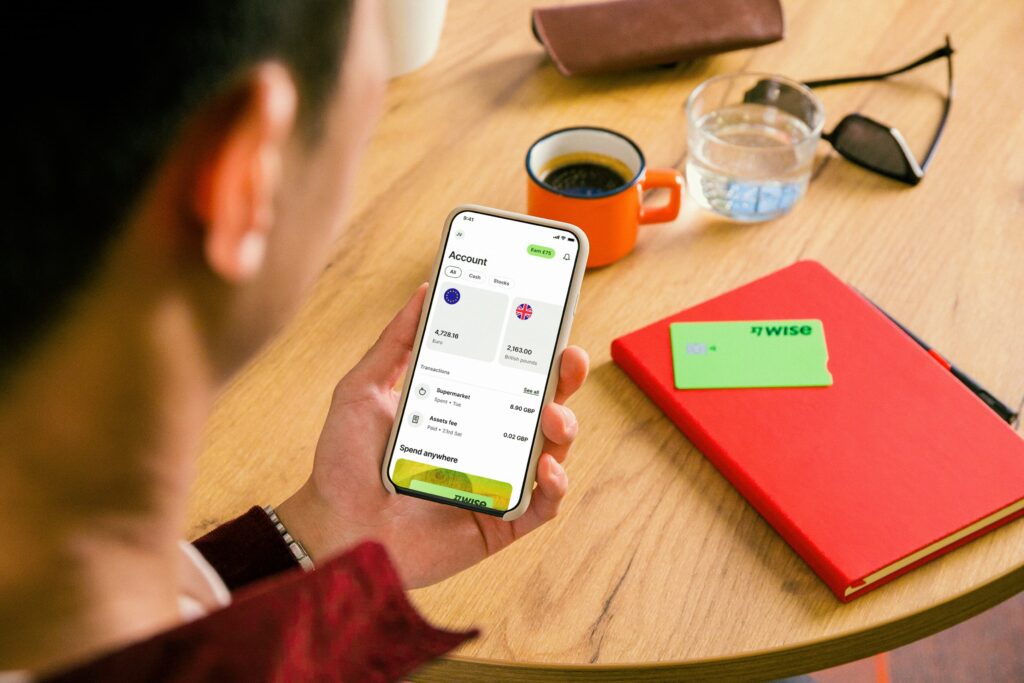
When managing your payments from abroad don’t overlook the impact of exchange rate fluctuations on income and tax obligations. Currency exchange affects cross-border financial management in several ways. If you’re earning in a foreign currency, for example, and paying a tax in AUD, you’ll need to convert your foreign currency to dollars to pay the ATO. Get a bad rate and you could find you pay more than you expect – pushing up your tax bill along the way.
If you need to manage cross currency payments, check out Wise as a multi-currency account solution for keeping on top of your international finances without surprise, hidden or excessive fees. Wise allows you to hold 40+ currencies, and receive payments in 8+ currencies with local account details. This means you can get paid to your Wise account from a foreign employer for example, and then convert to AUD for your tax payment using the mid-market rate and low, transparent fees from Wise. With ways to send money to 140+ countries including Australia, Wise has everything you need to manage your money across borders.
What to do when leaving Australia
If you’re still planning your move from Australia you’ll need to get your local taxes in order as soon as you can. The ATO can offer advice to help you navigate, or if your tax status is complex you might benefit from having a tax advisor on hand instead.
In the year you leave Australia you may be entitled to some tax free allowance on your earnings to the point you leave, but this calculation works differently to the way you’d figure out your obligations if you had remained a tax resident for the whole year. Make sure you read up on the calculation method before you complete your filing.
As part of planning your move abroad, why not set up a Wise account to simplify managing your finances across borders. You can apply for your account in Australia using your local ID and proof of address to get instant access to 8+ local account details and 20+ SWIFT details to receive incoming payments, as well as ways to hold 40+ currencies and send payments to 140+ countries.

Returning to Australia
For Australians who have been living abroad who are planning to return to Australia there may be different obligations depending on where you’ve been living. You’ll need to settle matters in your country of residence before you leave, and then on arrival in Australia you must check if you’re considered a tax resident immediately or not.
If you reside in Australia and your domicile is Australia, the chances are that you’re a tax resident – but as with all things tax, this can be complex and so getting individual advice can help you navigate this step.
Useful resources
- Australian Taxation Office – Australian tax authority website
- Australian Taxation Office – tax when coming to Australia or going overseas
- Australian Taxation Office – tax residency and how to assess your own residency
- Australian Taxation Office – going overseas and remaining an Australian tax resident
- Australian Taxation Office – going overseas and becoming a foreign tax resident
- Australian Taxation Office – how to pay taxes in Australia
- Australian government – list of tax treaties by country and coverage
- Australian government services – online portal for filing Australian income tax returns
- Wise – for low cost international payments around the world and managing multiple currencies in one account