
'%20id='ico-down'%20stroke='%23000000'%20stroke-width='1.5'%3e%3cg%20transform='translate(1092.250000,%20254.750000)'%3e%3cpolyline%20id='Path-2-Copy-4'%20transform='translate(5.500000,%202.750000)%20scale(1,%20-1)%20rotate(-180.000000)%20translate(-5.500000,%20-2.750000)%20'%20points='0%200%205.5%205.5%2011%200'%3e%3c/polyline%3e%3c/g%3e%3c/g%3e%3c/g%3e%3c/svg%3e)


Education
Higher Education
How to get your qualifications recognized in Spain
Getting academic qualifications recognized in another country is not always as straightforward as it sounds. Find out how to go about getting university degree recognition in Spain.

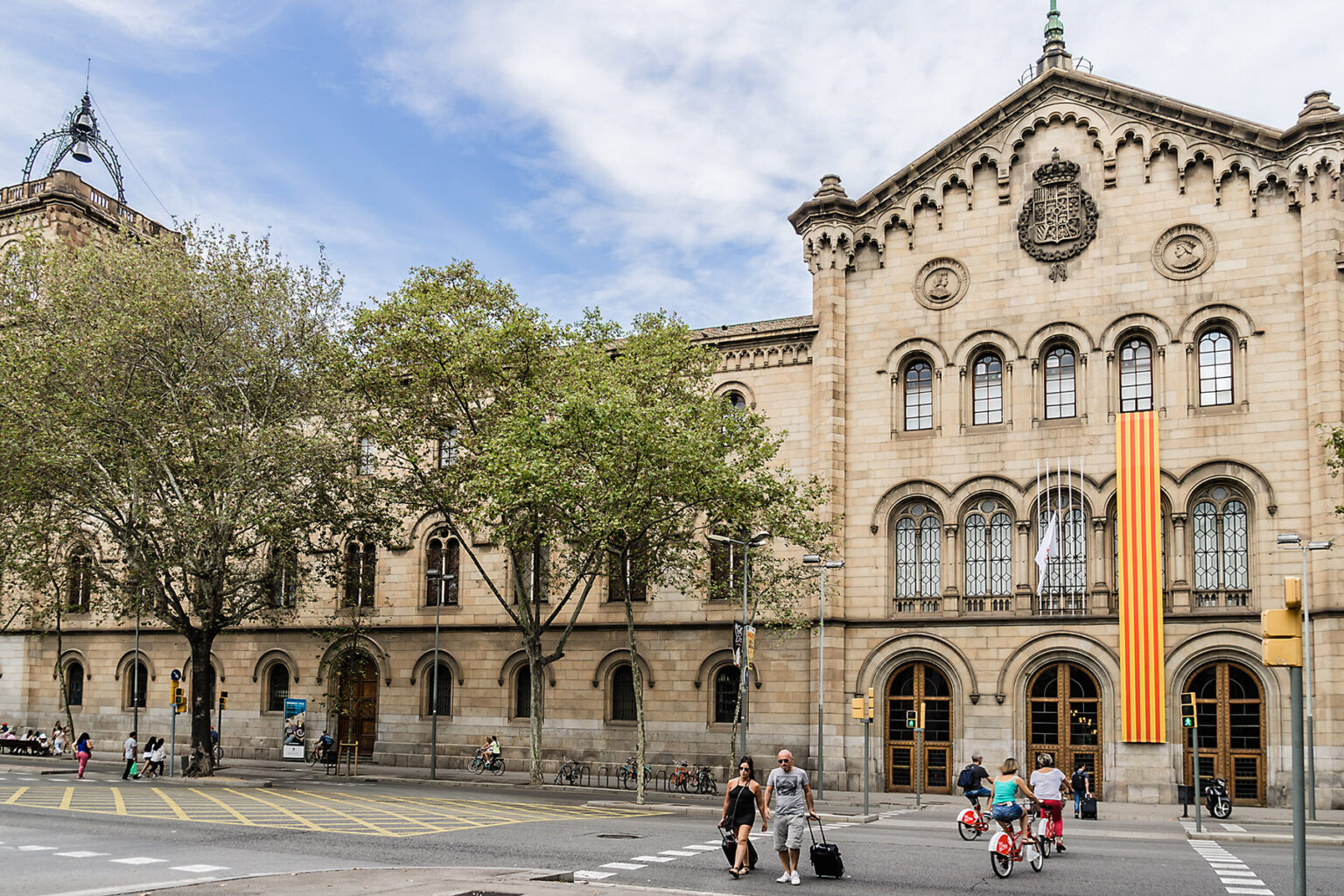
Having an overseas qualification officially recognized in Spain means that it has the same academic and professional value as its Spanish equivalent. You may need to do this to take up a professional post in Spain, or if you want to enroll in postgraduate studies in Spain.

The process of degree recognition in Spain (known as homologacion) is a complex and time-consuming one and there is no automatic recognition of academic qualifications between EU countries. Expat blogger Chris Showers, who successfully had his American degree recognized in Spain, explains what to expect.
Esade
Looking for a world-class Executive MBA program in Spain? Esade’s Madrid campus offers EMBAs with an international focus that are also flexible for students, with online, weekly, and monthly programs. Move toward your career goals with Esade and become a leader with a global business perspective.

Who needs degree recognition in Spain?
You might need to get university degree recognition in Spain if you:
- plan to work in Spain in a professional field (e.g., doctor, lawyer, professor) which requires academic credentials.
- apply for a post with the Spanish government.
- apply for postgraduate study at a Spanish university, such as Esade Business School
You won’t need to apply for degree recognition in Spain if you will be working in any field where degree-level qualifications aren’t mandatory.
Types of degree recognition in Spain
There are different types of degree recognition in Spain. These are homologacion (recognition of equivalence), reconocimiento professional (professional recognition) and reconocimiento parcial (partial recognition).
Homologacion
Homologacion is necessary for all non-EU/EFTA nationals applying for degree recognition in Spain. It is split into two types. The first type recognizes the equivalence of academic level. With this, you will receive confirmation that your degree is of a similar academic level to a Spanish qualification (e.g. bachelor’s, master’s, diploma) but it doesn’t align your degree to a specific academic major. This is the quicker of the two homologacion processes (taking around 6-8 months) and the one to opt for if you just need proof that you’ve attained a particular level of academic achievement.
The second type of homologacion recognizes the equivalence of a specific Spanish university degree. So, for example, if you’ve graduated with a degree in European Political History, you can apply to get this specific degree recognized in Spain. This can take slightly longer, around a year or more, but is the better option if you are working/studying in a particular field and your degree aligns with a Spanish degree.
Professional recognition
If you immigrate to Spain from a country of the EU or the EFTA (Norway, Iceland, Liechtenstein, or Switzerland), you’ll need to apply for professional recognition to get your degree recognized in Spain. This is a similar process to homologacion but slightly quicker and doesn’t involve paying a fee.
Partial recognition
If you don’t want to – or can’t – apply for homologacion, you can sometimes apply for partial degree recognition in Spain. This is only possible if you want to study in Spain. It has to be done through the university that you are applying to. If you need your degree recognized in Spain for employment purposes, you cannot apply for partial recognition. You will need to make inquiries with the university admissions team to see if this is an option.
You can find information about the different types of degree recognition in Spain from the Ministry of Education.
Where to apply for degree recognition in Spain
You can apply for degree recognition in Spain at the following places:
- The Spanish Ministry of Education and Vocational Training (MEFP). This is the best way of making an application, as the MEFP is the department responsible for authorizing recognition. You can apply through the MEFP website or through one of the registries in Madrid.
- The Spanish embassy or consulate in your home country.
- Any Spanish government office that serves as a public registry office at the national, regional, or local level.
Partial recognition can usually be requested through the Spanish university where you are applying to study.
How to apply for degree recognition in Spain
You will need to provide the following documentation (or copies of) in order to apply for degree recognition in Spain:
- passport or official ID
- degree certificate from your home country
- proof of payment of homologacion fee, if applicable
- proof of competence in the Spanish language (sometimes requested)
If you are applying through the MEFP, you can make the application online or access PDF copies of the application form on their website. Links to the online applications and downloadable forms can be found for:
- Homologacion type 1 (equivalence of academic level)
- Homologacion type 2 (equivalence of specific Spanish degree)
- Professional recognition for EU/EFTA citizens
If you’re applying for Spanish degree recognitionfrom the UK, you can find useful information about requirements and procedures on the Ecctis website.
Related Articles



Editor's picks
 Guide to getting health insurance in Spain in 2026Find out whether you need private health insurance in Spain in 2026, with insider info on costs, coverage, and medical professionals.
 International schools in SpainWant to send your child(ren) to an international school in Spain? Find out everything you need to know about fees, exams, and more.
 Dating in Spain: finding love as an expatSingle and ready to mingle? Learn how to find love on Spain's dating scene, where casual meet-ups can spark genuine romantic connections.
Did you find this guide helpful?