
'%20id='ico-down'%20stroke='%23000000'%20stroke-width='1.5'%3e%3cg%20transform='translate(1092.250000,%20254.750000)'%3e%3cpolyline%20id='Path-2-Copy-4'%20transform='translate(5.500000,%202.750000)%20scale(1,%20-1)%20rotate(-180.000000)%20translate(-5.500000,%20-2.750000)%20'%20points='0%200%205.5%205.5%2011%200'%3e%3c/polyline%3e%3c/g%3e%3c/g%3e%3c/g%3e%3c/svg%3e)


Moving
Visas & Immigration
Guide to citizenship: how to become a Russian citizen
Make sure you’re ready to apply for Russian citizenship by getting an understanding of the country’s nationality law.

Important notice from the Editor in Chief
Maintaining our Russian site is a delicate matter during the war. We have chosen to keep its content online to help our readers, but we cannot ensure that it is accurate and up to date. Our team endeavors to strike the right balance between giving information to those who need it, and respecting the gravity of the situation.
If you are relocating to Russia or looking to live their for a long period of time, you can opt for either permanent residency or Russian citizenship. Both afford you the rights of Russian nationals, although there are differences between them.
There are different conditions and requirements depending on where you are travelling from, with those from Russian speaking former Soviet countries able to more easily settle in Russia. There are also benefits for refugees and those who enter on a Highly Skilled Professionals visa.
This guide to Russian citizenship and Russian permanent residency includes information on topics such as:
Who can get a Russian passport or Russian permanent residency?
Foreign nationals in Russia can apply for Russian permanent residency after living in Russia for one year and for naturalization as a Russian citizen after five years of permanent residence. You can also do this sooner if you meet certain criteria.
In order to obtain Russian permanent residency, you must legally reside in Russia with a valid Russian temporary residence permit (other than nationals from Belarus, refugees from Turkmenistan, and those entering on a Highly Skilled Migrant visa, who are entitled to permanent residence upon entering Russia). This is normally for those in Russia on a long-stay visa such as a Russian work visa. Temporary residence permits have government quotas and certain categories of foreign residents receive preference. See our guide to Russian visas and residence permits for even more information.
The Russian General Directorate of Migratory Affairs (GUVM) issues residence permits and Russian passports.
Differences: Russian citizenship or Russian permanent residency?
The Russian permanent residence permit is a step towards taking on Russian citizenship. Many people are happy to settle in Russia on permanent residency alone. However, there are certain rights and benefits for both Russian citizens and permanent residents. Both may take up employment in Russia without a work permit. In addition to this, both are able to:
- freely enter and exit Russia without needing a visa
- access Russian social services
- permanently register at a Russian address
- engage in self-employment or set up a business
- vote in local elections and referendums
The following applies only to those with full Russian citizenship:
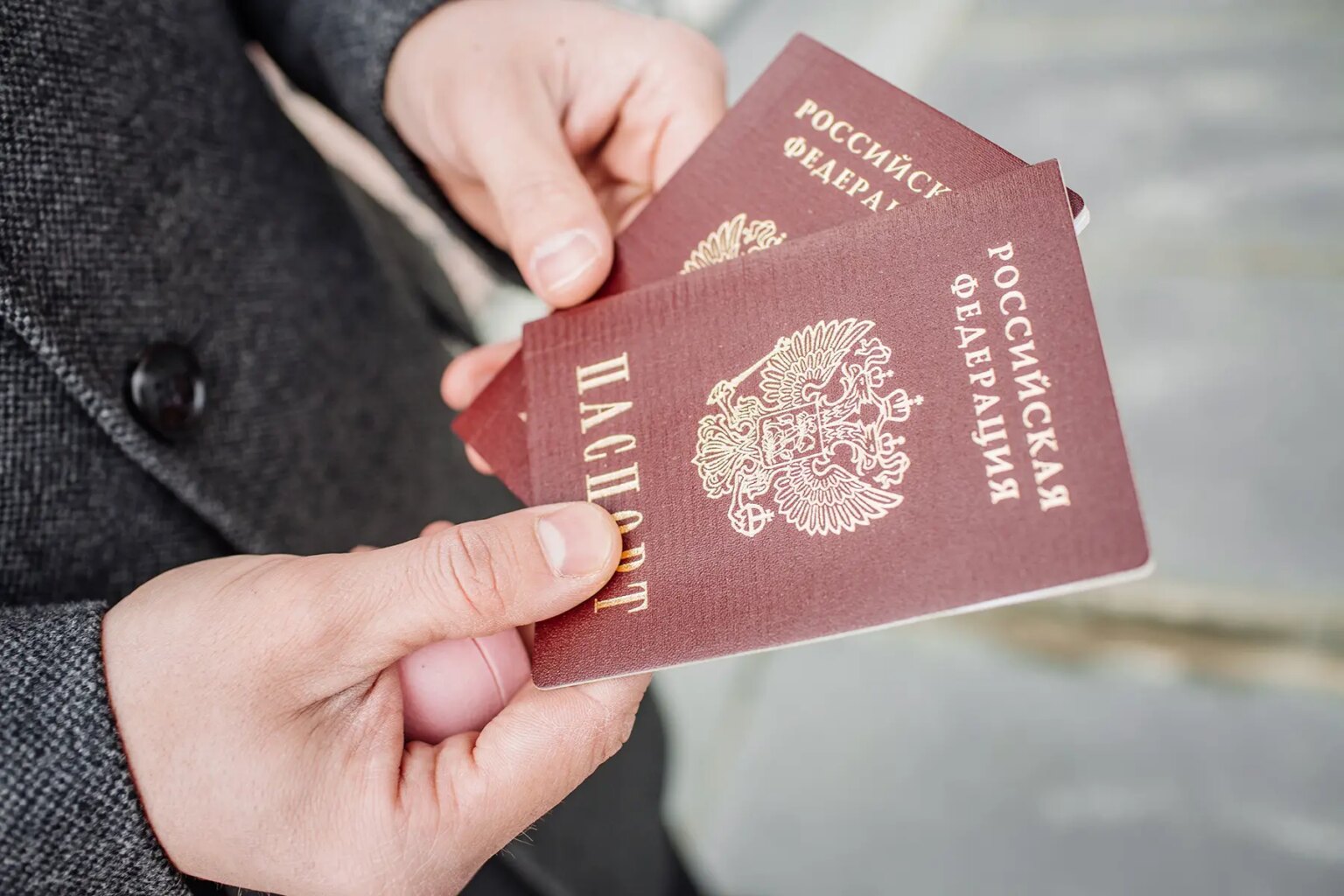
- issued with a Russian passport (ranked 43rd in the world on the passport index)
- full electoral rights in all national elections
- right to work in the state bodies of the Russian Federation
- duty to serve in the Russian military
- cannot be deported
- can live overseas for an unlimited period of time
The Russian permanent residence permit is valid for five years but can be renewed an unlimited number of times. However, it has to be registered with the GUVM every year. If a Russian permanent residence permit expires, it cannot be renewed. It will also become invalid if you leave the country for an unbroken six month period.
If you take full Russian citizenship through naturalization, you will also need to renounce the citizenship of your home country. You will also have to pay the Russian citizenship fee and embark on a process that can take up to a year to complete.
Applying for Russian permanent residence
You can apply for Russian permanent residence after one year of legally residing in Russia. You should do this six months before your temporary residence permit expires. The Russian permanent residence permit is valid for five years, can be extended an unlimited number of times but it cannot be issued beyond the expiration date of your passport. Renewal of a Russian permanent residence permit must be done at least two months prior to its expiration. If your permit is revoked, however, you must leave Russia within 15 days.
Russian permanent residence applications need to be made at the GUVM office in your region. A list of local GUVM offices is available here. Exact documents required vary depending on whether you are from a CIS or non-CIS country, but will include the following:
- 4 x passport-sized photographs
- passport or valid ID
- proof of income to sustain yourself and any family members you are supporting
- proof of accommodation
- medical certificate confirming absence of HIV (AIDS)
- proof of proficiency in Russian language, knowledge of Russian history and of the foundations of the Russian Federation
If you are living in Russia, you can check your eligibility for a Russian permanent residence permit here.
Russian citizenship requirements
Current Russian citizenship requirements are according to the 2002 Russian Citizenship Act. You can acquire Russian citizenship through the following ways:
- by birth
- through naturalization (either common or simplified process)
- by restoration of citizenship for former citizens
Russian citizenship by birth
A child can claim Russian citizenship through birth if any of the following applies:
- both parents are Russian citizens (or one parent if a single parent)
- if one parent is a Russian citizen and the other is stateless
- one parent is a Russian citizen and the other is a foreign national, if the child is born in Russia
- one parent is a Russian citizen and the other is a foreign national, if the child is born outside Russia and hasn’t been granted citizenship of any foreign country
- both parents are foreign nationals living in Russia, if the child is born in Russia and hasn’t been granted citizenship of any foreign country
- a child in Russia without parents, if still parent-less after a 6 month period
Russian citizenship by naturalization (common process)
Foreign nationals living in Russia can apply for citizenship by naturalization if they meet the following requirements:
- they hold a valid permanent residence permit
- they have lived as a permanent resident in Russia for five years (with no periods living outside Russia exceeding three months in any one year)
- agree to abide by the Russian constitution
- can provide proof of legal means of subsistence for themselves and any family members they are supporting
- have renounced the citizenship of their home country (except for countries that have dual citizenship treaties with Russia)
- can provide proof of basic command of the Russian language
The Russian permanent residence requirement can lessen to one year for the following groups:
- those who have entered Russia on a Highly Qualified Professional visa
- those who have refugee status
Russian citizenship by naturalization (simplified process)
Certain categories of foreign national can apply for Russian citizenship by naturalization as soon as they have become permanent residents. These are foreign nationals who:
- have at least one parent who is a Russian citizen living in Russia
- had former USSR citizenship but have not taken citizenship of any former USSR country
- are citizens of former USSR states who have received secondary, vocational, or higher education in Russia after 2002
- were USSR citizens born in Soviet Russia
- were married to a Russian citizen for at least three years
- have a disability and have a capable child who is a Russian citizen
- have a disability and are from a former USSR country
- are from a former USSR country and were legally residing in Russia on 1 July 2002
- World War Two veterans who were citizens of the former USSR
- are a child or a disabled person with a legal guardian who is a Russian citizen
Restoration of citizenship for former Russian citizens
Former Russian citizens who have given up their Russian citizenship voluntarily may have their Russian citizenship reinstated after three years of residence in Russia.
Russia also has a joint international treaty with Belarus, Kazakhstan and Kyrgyzstan enabling citizens of those countries to apply for Russian citizenship using a simplified process.
Applying for Russian citizenship
The GUVM processes Russian citizenship applications. Before applying for Russian citizenship by naturalization, you need to submit a request to an authorized agency to renounce the citizenship you hold within your home country. This request will only be carried through upon being successfully granted Russian citizenship.
You will need to submit your Russian citizenship application through the GUVM, as well as documents including:
- proof of Russian language capability
- proof of income
- application to renounce current citizenship
If your Russian citizenship application is successful, you will be issued with an internal Russian passport (to be replaced with a citizen’s identity card in 2018) and will also be eligible to apply for a Russian passport for international travel. Russian passports are valid for 10 years.
Decisions on Russian citizenship applications can take up to a year and are made by the Office of the President of the Russian Federation. Applications via the simplified process take up to six months and are made by the GUVM. If your application for Russian citizenship is rejected, however, you are entitled to appeal through the courts. You should contact your local GUVM office for information.
Russian citizenship costs
The Russian citizenship cost is R3500 for the application. Those from former USSR countries who haven’t taken up citizenship in these countries, as well as parent-less children, are exempt from this fee. The cost of a Russian passport is R3500 for adults and R1500 for children. It is possible to purchase a special shorter-term passport that lasts for five years for R2000.
Dual nationality in Russia
Russian dual citizenship is a complex issue. On the one hand, Russia officially allows dual citizenship and Russian citizens can acquire citizenship abroad without giving up their Russian citizenship. However, the Russian state sees dual citizens as Russians only. In fact, Russia has dual citizenship treaties with just two countries: Tajikistan and Turkmenistan. Citizenships of these countries are equal. However, recent changes in the law mean that Russian citizens acquiring dual nationality abroad need to inform their local GUVM office within 60 days.
If you become a Russian citizen through naturalization, you must renounce the citizenship of your home country during the Russian citizenship application process. This may provide grounds for you permanently losing your citizenship of your home country, depending on what the rules are regarding citizenship. You will also need to enquire with the relevant authorities of your home country if you have concerns regarding this.

Did you find this guide helpful?