
'%20id='ico-down'%20stroke='%23000000'%20stroke-width='1.5'%3e%3cg%20transform='translate(1092.250000,%20254.750000)'%3e%3cpolyline%20id='Path-2-Copy-4'%20transform='translate(5.500000,%202.750000)%20scale(1,%20-1)%20rotate(-180.000000)%20translate(-5.500000,%20-2.750000)%20'%20points='0%200%205.5%205.5%2011%200'%3e%3c/polyline%3e%3c/g%3e%3c/g%3e%3c/g%3e%3c/svg%3e)


Education
Children's Education
International schools in Spain
Want to send your child(ren) to an international school in Spain? Find out everything you need to know about fees, exams, and more.

Many expats send their children to international schools in Spain. These can offer a globally-oriented education, with qualifications such as the International Baccalaureate (IB) enjoying international recognition. Depending on your situation, an international school could be a great fit for your child.
If you’re considering international schools in Spain, this helpful guide provides all the information you need to make the right decision, including the following:
Barcelona High School
Barcelona High School is an international American School in Barcelona, Spain. The school provides the US curriculum and High School Diploma, and is the only school to offer the AP program. This Social Wellness School provides student-centered learning so your child is ready for a bright international future.

The Spanish education system
Education in Spain is compulsory between ages six to 16. The system includes six years of primary education followed by four years of secondary and is free at state schools. Moreover, children’s education before primary school (educación infantil) is divided into two stages: nursery (ages three months to three years) and infant school (three to six years). And while these aren’t compulsory, they are popular options in Spain.
After the age of 16, students can decide whether to follow vocational training or study for exams in preparation for higher education. You can find out more about this in our guide to education in Spain.
International schools in Spain
There are 281 international schools in Spain. These schools are located in 28 different cities, with the majority being in Madrid (56) and Barcelona (47). International schools are popular among expat families with short postings in a new country, such as embassy staff and NGO workers. Some international schools in Spain also provide boarding facilities and special educational needs (SEN) support, making them attractive to certain families, depending on their circumstances.
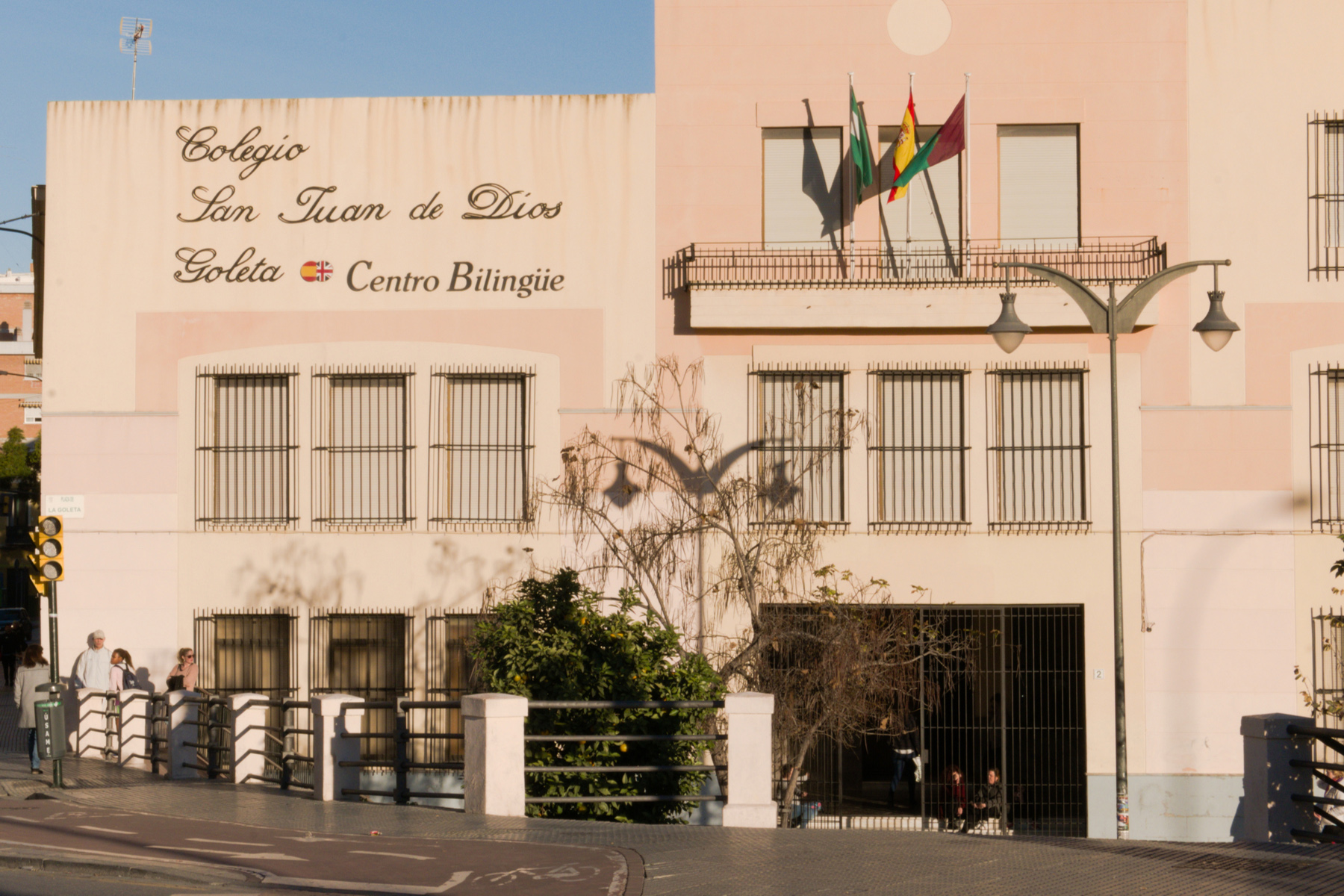
The most notable difference between local and international schools in Spain is the language. International schools often follow another country’s curriculum, such as that of the UK, US, or France. While many international schools use English or French as the primary language of instruction, Spain is also home to bilingual international schools. These schools teach the Spanish curriculum (primary, secondary, and bachillerato) and accept Spanish and international students. The bachillerato is the qualification that students need to go to university.
There are several accreditation bodies that indicate a school’s standards, so it’s worth checking if a school belongs to one. International accreditation organizations include:
- Council of International Schools (CoIS)
- Educational Collaborative for International Schools (ECIS)
- Mediterranean Association of International Schools (MAIS)
If you are keen on sending your child to a British, American, or French school in Spain, then look for the following associations:
- Agence pour l’enseignement français à l’étranger (AEFE)
- Council of International British Schools (COBIS)
- National Association of British Schools in Spain (NABSS)
- New England Association of Schools and Colleges (NEASC)
International school fees can vary greatly, from around €2,000 to over €20,000 per year, so be sure to know what you are signing up for before you make your decision.

Types of international schools in Spain
International Primary Curriculum (IPC)
Some international primary schools in Spain follow the International Primary Curriculum. This system is used in 90 countries and teaches children aged five to 11 years. Thematic units of learning make up the curriculum, which broadens children’s understanding of the world. Assessments show whether they are beginning, developing, or mastering skills. Students are also encouraged to reflect on their progress.
International Baccalaureate (IB) in Spain
Education for the IB in Spain begins at age three and continues until 19. The IB is split into three distinct programs: Early Years Program, Middle Years Program, and Diploma Program. The programs on offer typically depend on the school, so if this is what you are considering for your child, you will need to do your homework.
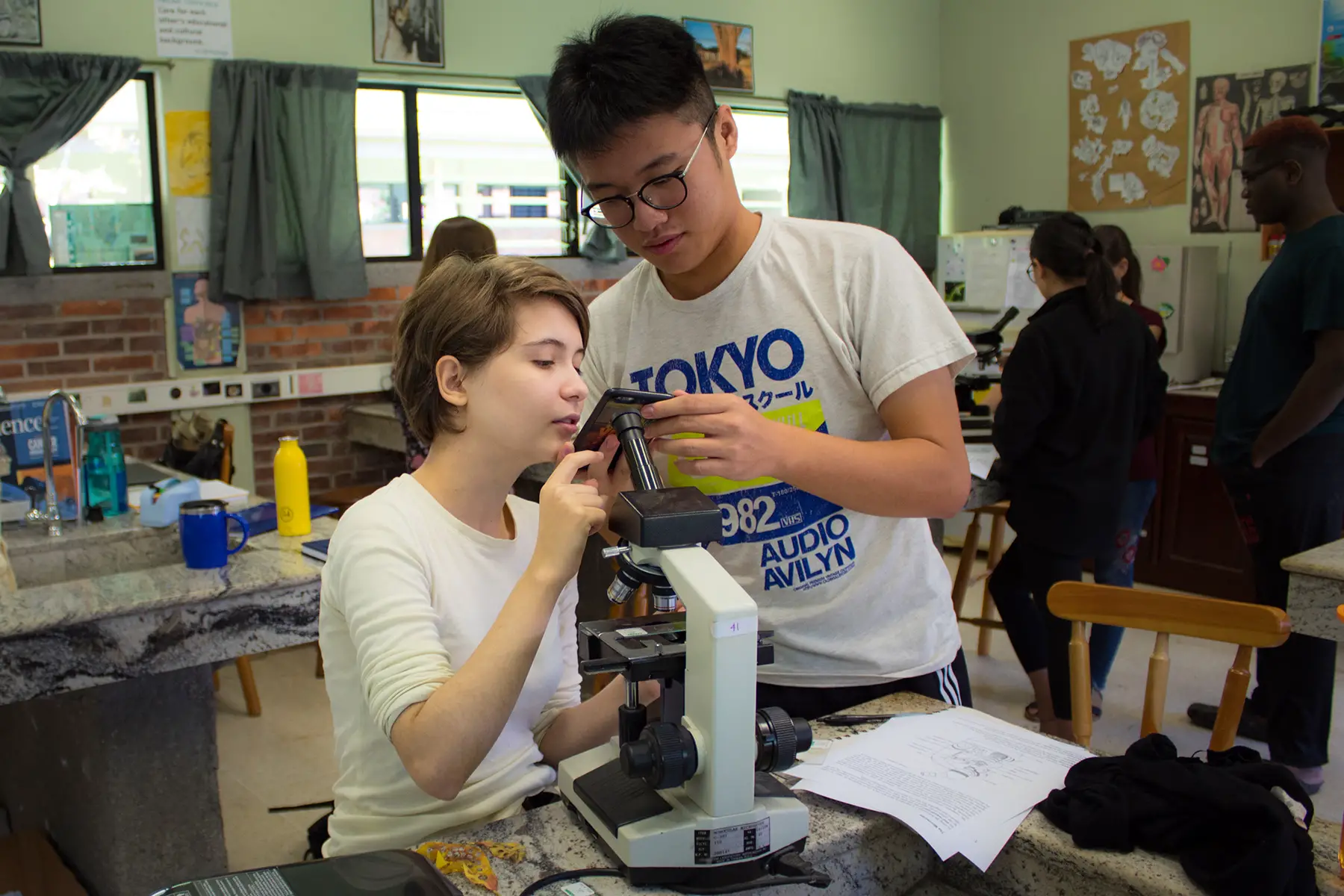
At the Diploma level, students undertake three subjects at a standard level and another three at a higher level. These must include a second language, maths, and science. The Diploma is assessed through essays, coursework, and work outside the classroom, such as arts, sport, and community service. Since 2008, it has held the same level as a Spanish high-school qualification.
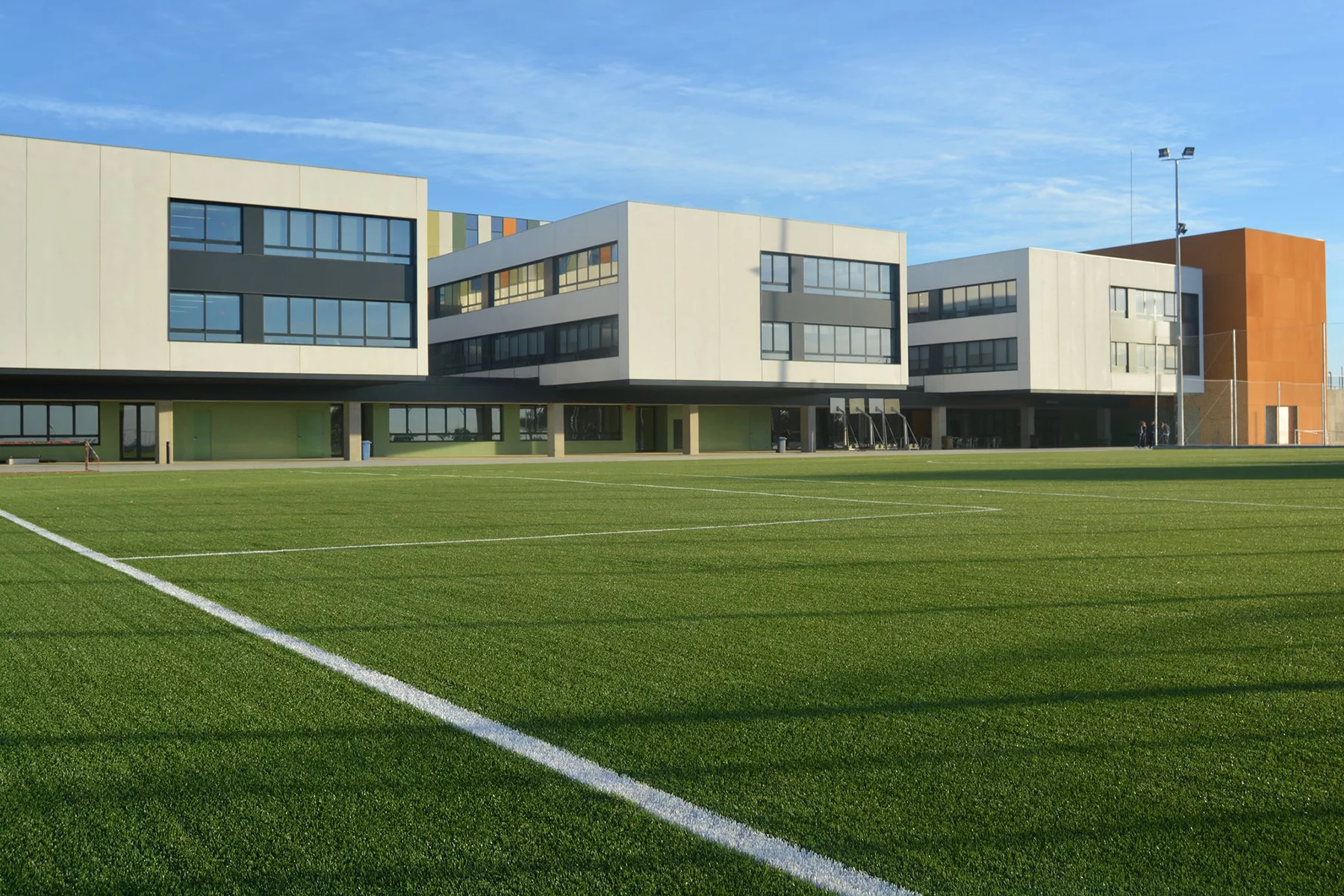
The IB has a strong reputation worldwide and is now taught in 155 schools in Spain; 89 of which teach in English or a combination of English and Spanish. Schools offering IB curriculum programs include:
American international schools and Advanced Placement (AP)
Various US states accredit the American schools in Spain, which follow their education system. The schools are usually divided into elementary, middle, and high schools, with US English as the main language of instruction.
Most American schools follow a system where students attain their high school diploma at the end of Grade 12 (age 17 to 18) with a Grade Point Average (GPA). Students obtain these credentials based on their results for projects, essays, tests, and group work.
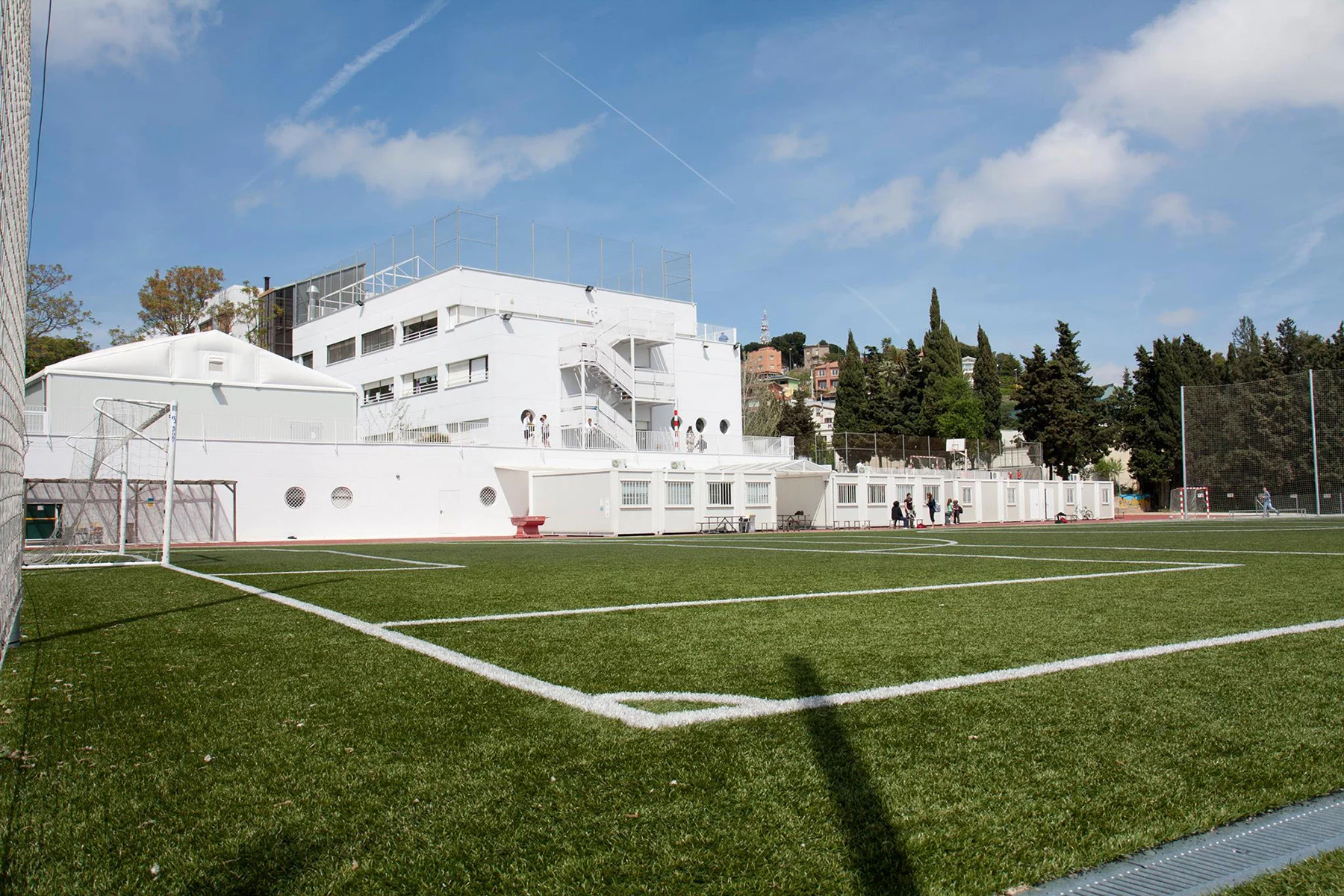
Similar to the United States, standards for grades can vary from school to school. Therefore, students can take a standard test for college admission. Some schools also offer Advanced Placement (AP) programs for high-achieving students wanting to take college-level courses and exams.
Some popular American international schools in Spain include:
- American School of Barcelona
- American School of Madrid
- American School of Valencia
- Aquinas American School
- Barcelona High School
- Benjamin Franklin International School
British international schools
Spain has the largest British-born population in Europe outside the UK, and it now has 79 British schools. These offer education to children from nursery age until 18. They belong to NABSS and usually follow the British schooling system, including GCSEs at 16, and AS and A-levels at 17 and 18. In addition, some schools give students the option to study for the IB and the bachillerato for continued studies in Spain.
Some popular British international schools in Spain include:
- British Council School
- The British School of Barcelona
- Cambridge House Community College
- Hastings School
- The Olive Tree School
The Olive Tree School
Looking for an International British School for your 3 to 16 year old? The Olive Tree School, located in Sant Pere de Ribes near Barcelona, follows the British curriculum and is an NABSS member. They offer small class sizes, a creative learning environment, and prioritize a warm, caring environment for every student.
International GCSE (IGCSE)
The International GCSE (IGSCE) is an assessment that students can begin in Year 10 (age 14 to 15) of a British-system school, taking final exams in Year 11 (age 15 to 16). It is comparable to the GCSE (General Certificate of Secondary Education), as it consists of individual subjects marked nine to one (one being the best). Currently, there is little difference between the IGCSE and the GCSE. Still, students can receive an International Certificate of Education if they pass seven subjects with the top four grades.
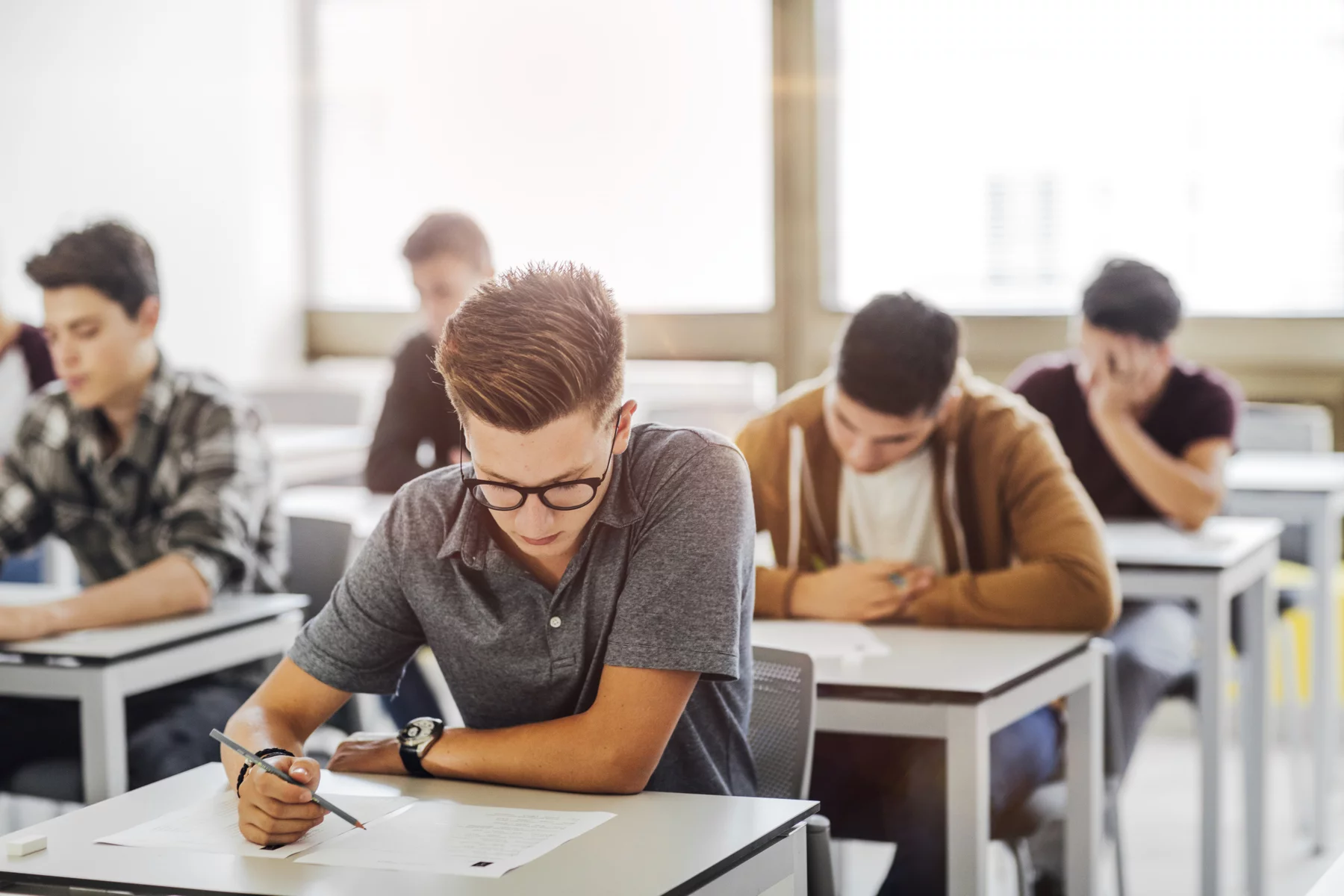
This qualification is recognized worldwide and is good preparation for AS and A-levels or Cambridge International Examinations. However, the exams can occur at different times of the year, so it is worth finding out which examination board your school uses.
Other international schools in Spain
Apart from British and US schools, there are also other international schools in Spain, including the following:
- French: there are many French schools across Spain; for example, Le Lycée Français de Madrid, which is operated by AEFE.
- German: the Deutsche Schule Barcelona fosters integration through teaching German-, Spanish-, and Catalan-speaking children together. German schools exist in many big cities in Spain.
- Italian: the Scuola Statale Italiana di Madrid is owned by the Italian government and follows the Italian schooling system.
- Swedish: The Swedish School in Majorca offers schooling in Swedish, Spanish, and English.
Religious schools in Spain
Catholicism is the dominant religion in Spain, and most international religious schools are Christian; although it is possible to find Jewish schools too. Most private schools follow a Catholic framework. Christian Schools in Spain (CSS) form the network of Spanish Christian international schools.
Method schools in Spain
In addition to traditional schooling, there are international schools in Spain that offer alternative systems, as follows:
- Montessori schools in Spain, such as British Montessori, offer a child-centered, self-directed way of learning. Some combine the Montessori method with other curriculums.
- Several Steiner Waldorf schools have existed in Spain since 1990. These small schools usually teach in Spanish, but some have a large proportion of students from elsewhere. They encourage practical, creative, and emotional skills.
- Other types of schools, such as the Social Wellness school pioneered by Barcelona High School. This school focuses equally on academics, student social life, and mental health.
Should you send your child to an international school in Spain?
If you are still trying to decide whether an international school is right for your child, then you should consider the pros and cons below.
Pros
- International schools offer more extracurricular activities and better facilities, often including green areas and sports facilities.
- Students can obtain internationally recognized qualifications.
- International schools provide a global environment with students and teachers from all over the world, allowing students to gain an international mindset.
- Schools offer small classes with a high teacher-to-student ratio.
- The language and curriculum can provide more familiarity and consistency with previous and future studies.
- Parents can communicate with the school in their native language.
Cons
- While international schools in Spain can be less expensive than elsewhere in Europe, they are still far from cheap; you could pay between €2,000 and €20,000 per year. That said, some schools offer full or partial scholarships to students who achieve outstanding academic results.
- If you are staying in Spain long-term, then it could hinder your child’s integration into Spanish culture.
- Not every city has an international school, therefore, it could be a challenge if you want your child to follow a specific curriculum.
- With high academic standards, some students may feel increased pressure.

Nonetheless, with proper research into the available schooling options, you are sure to find the best solution for your child.
How to choose an international school in Spain
Once you have decided to go down the international school route, the next step is to choose one. While each school has its own merits, there are several factors to consider, as follows:
- Location: many of Spain’s international schools are in Madrid, Barcelona, and the Costas. While there are some in Spain’s other large cities and islands, you may have limited options outside these areas, so might want to consider boarding options.
- Education system: you may want to find a school that follows a certain style or academic system, particularly if you’re planning to move elsewhere in the future.
- Primary language of instruction: most schools have English or French as their main language, but others are bilingual.
- Qualifications available: some schools offer more than one type of certificate. The school you choose might depend on whether your child wants to continue to higher education and in which country.
- Reputation: this can be tricky to assess if you don’t yet have a network, but The Good Schools Guide is a good place to start.
- Academic results: for secondary education, it’s also worth checking the percentage of students who continue to higher education.
- Fees: these can range from around €2,000 to over €20,000 per year, so be sure to know what you are signing up for before you make your decision.
- Admission and enrolment procedures: some schools require academic testing, language testing, or personality-focused assessment before registration.
- Extracurricular activities and facilities: the clubs, activities, and trips available can vary greatly. Some schools even offer summer camps or language courses.
Financial aid and scholarships for international schools in Spain
While government aid doesn’t cover expenses for international schools, many schools offer scholarships and subsidies to families who may otherwise not be able to afford international education. Furthermore, some schools provide bursaries to children who are already attending an international school and whose families are experiencing unexpected financial hardship. Financial aid is also available for children who excel in academia, art, or sport.
Families with children with special educational needs can also receive benefits from the government. And while Spain encourages all children to attend the mainstream schooling system, this is not always possible. Children’s needs can be assessed at a Center for Special Needs (Centro de Valoración y Orientación de Discapacitados). Children whose learning difficulties are determined to be 33% or more will receive a grant for assistance in school.
How to apply for financial aid
To apply for financial aid, including scholarships, bursaries, and subsidies, you should contact your prospective school. For scholarships, the first step usually involves completing a form and providing evidence of the child’s achievements. These could include their sports videos, an artwork portfolio, or academic records.
When applying for low-income bursaries and subsidies, you might also have to provide in-depth financial records in the application form. The aid office may also require children to complete an assessment.
For financial aid from the state for special education needs, you can contact the Instituto Nacional de la Seguridad Social (INSS) which oversees family benefits in Spain, including those related to disability.
Useful resources
Related Articles

Editor's picks
 Top 10 Spanish foods – with recipesWhat better way to explore Spain than with your tastebuds? From tasty tapas to delicious dishes, here are the best Spanish foods.
 Dating in Spain: finding love as an expatSingle and ready to mingle? Learn how to find love on Spain's dating scene, where casual meet-ups can spark genuine romantic connections.
 Guide to getting health insurance in Spain in 2026Find out whether you need private health insurance in Spain in 2026, with insider info on costs, coverage, and medical professionals.
Did you find this guide helpful?